

Authored By: Zachary Waszczak
Stormwater Management and Testing Basics
As our communities grow and living spaces become denser, stormwater management is becoming more critical. Local, state, and the federal government are becoming increasingly focused on stormwater management as it offers solutions to problems like water quality, water scarcity, flooding and pollution. This article will help you understand the basics of stormwater management and the critical step of stormwater testing.
What is Stormwater and Stormwater Management?
Stormwater is water that originates from precipitation like snow or rain. This precipitation lands on the earth and can either be absorbed into the ground and become groundwater or move along a surface and become runoff. Runoff is the primary concern of stormwater management. Stormwater needs to be guided safely to bodies of water to prevent flooding and minimize pollution. While all precipitation is technically stormwater, the term is most commonly used to refer to runoff.
Managing stormwater is essential to a healthy community. When stormwater is not managed it can cause erosion, flooding, and pollution. When rainwater lands on impermeable surfaces like pavement, it runs across those surfaces picking up contaminants. It will eventually carry these contaminants into a body of natural water. As our communities grow the amount of pavement and impermeable surface area increases which increases the amount of runoff that needs to be managed.
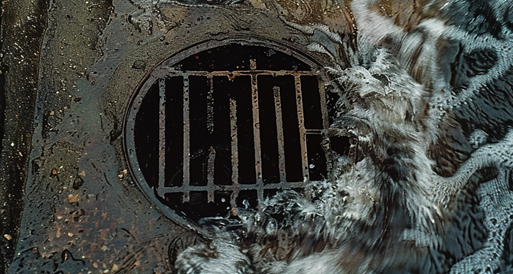
Stormwater management programs (SWMPs) utilize methods like constructing stormwater infrastructure, increasing green spaces and testing stormwater for quality to prevent erosion, reduce flooding, increase water quality, protect the environment, and turn stormwater into a usable resource for the community.
Who is Responsible for Stormwater Management?
Stormwater management is usually the focus of three different groups: government entities, private owners, and environmental groups.
The Government in Stormwater Management
Governments at the state and local levels identify where stormwater management is necessary, and issue permits for stormwater. Municipal separate storm sewer systems, or MS4s, are permitted by state governments who have been authorized by the Environmental Protection Agency (EPA). These are a type of National Pollutant Discharge Elimination System (NPDES) permit and are often just referred to as MS4 permits. Government entities are also responsible for finding and confirming violations of these permits.
Private Owners in Stormwater Management
The owners, managers, and employees of industrial sites, construction sites, and other MS4 permit holders are responsible for enacting stormwater management programs. They will be managing infrastructure, performing stormwater quality testing, and working to meet regulations.
Environmental Groups in Stormwater Management
Many environmental groups and citizen science groups monitor stormwater. These groups track water quality in their community and help identify where illicit discharges originate from. They often utilize field test kits to get rapid water quality results and work to educate the public about stormwater.
Stormwater Quality Testing
A major aspect of stormwater management is testing stormwater quality. Stormwater testing helps determine the impact stormwater has when it enters waterways. Stormwater monitoring is often a requirement of an MS4 permit and according to the National Association of Clean Water Agencies “can be one of the most expensive requirements of an MS4 program.” Implementing an appropriate testing regime is critical to the success of a SWMP.
Common Stormwater Testing Parameters
While every situation is different, the common tests you will see for stormwater include:
- pH – determines if the water is acidic or basic.
- Turbidity – measures the haziness of water by measuring light passing through the water.
- Total suspended solids (TSS) – measures the concentration of solid particles in the sample.
- Biochemical oxygen demand (BOD) – measures how much dissolved oxygen is consumed by microorganisms.
- Chemical oxygen demand (COD) – measures how much dissolved oxygen is consumed by chemical oxidation of organic matter.
- Hardness
Other tests for heavy metals, chemicals, or microbes may be done as well depending on the situation.
Stormwater Testing Methods
Stormwater testing is done in one of two ways, field testing or lab analysis.
Field Testing Stormwater
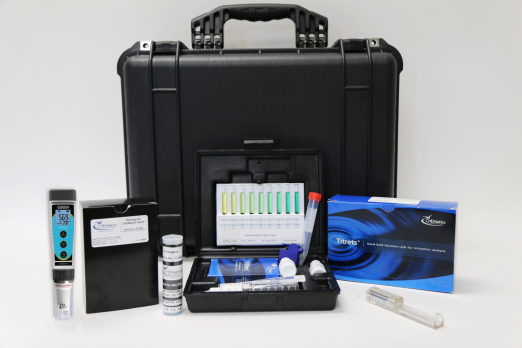
Field testing is most convenient and quickest way to get results. These kits are usually contained in a convenient carrying case that contains reagents and instruments so testing can be done right on location. These kits are favorites of environmental and citizen science groups. Field testing is also the optimal way to spot-check your system before you need to report to regulatory bodies. Field test kits also allow for quick testing of multiple sites making it easier to trace where illicit discharges are originating from.
Lab Analysis of Stormwater
Another way to test stormwater is by taking samples and sending them to a lab for analysis. This method takes longer and is often more expensive than field test kits, but it offers more comprehensive testing. If testing through this method, ensure that the lab you partner with is accredited, has the proper testing methods, and will provide the necessary documentation.
Sampling
Regardless of the testing method you will need to follow specific sampling rules. Stormwater sampling requires consistent documentation and planning. To successfully gather a stormwater sample there needs to be a rain event with 0.1 inches of rain with no rain 24 hours prior to the event. You will also need to be sampling from specific sites in your system. Follow your sampling requirements closely and document accurately. Include information like when the rain started, when you grabbed your samples, and anything that stood out to you.
The Benefits of Testing Stormwater
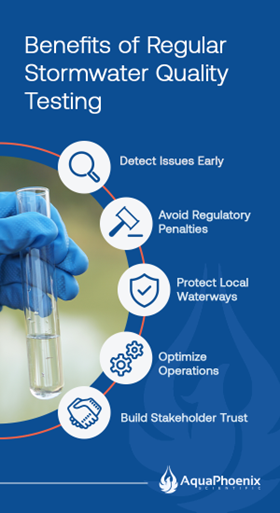
Proper monitoring of stormwater can hold many benefits for the community and the permit holder. Permit holders will prevent costly fines and poor public image in the community. It can also prevent unnecessary damage to equipment and infrastructure. Everyone within the community will benefit from a healthier environment with cleaner waterways.
Stormwater Testing with Aquaphoenix and CHEMetrics
Aquaphoenix and CHEMetrics understand the challenges that come with stormwater testing and have created the AquaPhoenix Stormwater MS4 Test Kit (TKIDDEMS4-STD) to make field testing simpler.
The standard MS4 test kit comes with a CHEMetrics test kit for:
Detergents, Ammonia, and Hardness as well as a meter for conductivity and a pH test. The test kit is also customizable with optional addon tests including:
- Chlorine
- Color
- Copper
- Dissolved Oxygen
- Nitrate
- Nitrite
- Phenols
- Potassium
- Orthophosphate
- Turbidity
If you need an analyte not listed, reach out to us for further customization. The kit comes in a secure plastic case that is foam lined, perfect for carrying out into rainy weather. Don’t be fooled by the name, the AquaPhoenix Stormwater MS4 Test Kit is great for citizen science, environmental groups, or anyone trying to track down an illicit discharge location. No MS4 permit required!