
Authored by Zachary Waszczak
Accurate testing helps municipal and industrial wastewater treatment plants (WWTPs) run at peak efficiency. Producing reliable test results requires appropriate samples and testing procedures. Inaccurate wastewater analysis could lead to unnecessary adjustments to your treatment process or even regulatory fines. These tips will help any wastewater operator pull quality samples and test them reliably.
Sample and Test Safely
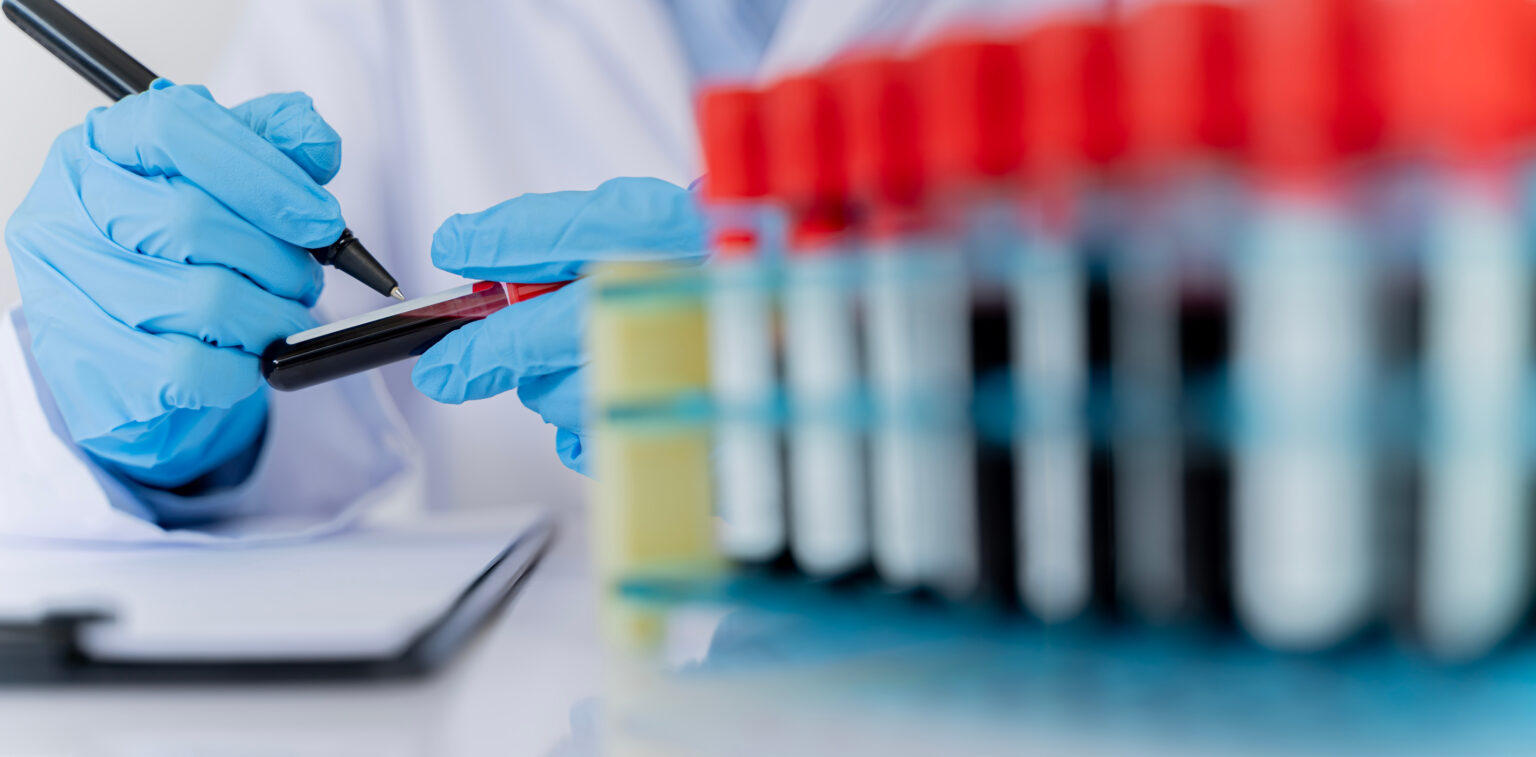
Yes, even in wastewater sampling and testing, safety comes first! Wastewater can contain harmful pathogens and chemicals, so follow your organization’s safety guidelines closely. Always ensure you are wearing the appropriate Personal Protective Equipment (PPE) when pulling samples or conducting a test. After working with wastewater samples practice proper hygiene by washing your hands to keep yourself safe and prevent contamination of the area around you.
Don’t Cross Contaminate Samples
A cross contaminated sample will not only provide an unreliable test result, but it will also require time to pull a new sample. Contaminated samples lead to a lot of wasted time, resources, and labor. Here are some tips from the USEPA Wastewater Sampling Operating Procedure on preventing cross contamination:
- Replace your disposable gloves each time you sample at a new location. The gloves should never touch what is being sampled.
- Wastewater samples that are suspected of containing high concentrations of contaminants should be stored separately from other samples.
- Wastewater sampling should be done from the area with the least amount of contamination to the most.
- Ensure your samples are stored under their correct conditions. Some samples may need to be refrigerated to a specific temperature or cannot have headspace.
Document and Label
Taking the time to properly label samples, log the conditions they were taken in, and record test results will save you time in the long run. Every sample should be labeled with:
- What the wastewater sample is for
- The date the sample was drawn
- Your initials
- Where the sample was drawn from
- The original volume of the sample
- The test to be run on the wastewater sample
Recording the conditions the samples were taken under can help draw patterns if you need to troubleshoot a surprising result. Test results should be recorded according to your organization’s standards. Municipal wastewater facilities and industrial facilities may utilize different methods of recording test results.
Understand the Different Types of Wastewater Samples
The properties of wastewater are dependent on what is going through the system at any given time. For example, municipal wastewater follows a diurnal pattern where there is peak influent in the morning and in the evening. The samples taken during these times would be different from samples taken outside of the peak flow. To account for this variability wastewater sampling uses two common categories of samples, grab and composite .
Grab Sample
Grab samples are wastewater samples taken at one single time. They provide details for that single moment. Taking an aliquot of wastewater for analysis would be an example of a grab sample. These samples are most often used for process checks to ensure systems are operating properly.
Composite Sample
Composite samples of wastewater are used to analyze the average properties of the influent or effluent. They comprise of aliquots of sample taken over an extended period. An automatic sampler that draws a sample every hour and puts it into the same container is taking a composite sample. These samples are used to find larger trends when the average state of the wastewater treatment plant is important.
Analyzing Wastewater
Depending on your National Pollutant Discharge Elimination System (NPDES) permit, the tests you use to analyze wastewater may be different from other municipal wastewater or industrial facilities. The following tests are common in wastewater analysis and if not required by NPDES are often run as process checks to keep WWTPs running at peak efficiency.
Testing for Ammonia in Wastewater
Ammonia levels in effluent are strictly enforced by the USEPA and state organizations as it is toxic to fish and the environment. As a result, many municipal wastewater and industrial wastewater facilities are designed with removing ammonia as a primary concern.
Testing for Chlorine in Wastewater
Chlorine is widely used as a disinfectant in municipal wastewater. It is a relatively low-cost disinfection method and can be applied as a solid, liquid, or gas. Chlorine will remain in wastewater for hours after application and provide disinfection as residual chlorine.
Most WWTPs will have discharge permit requirements for total residual chlorine in their effluent. Even at low doses chlorine can be toxic to aquatic wildlife, so managing chlorine is a top priority for both human and animal health.
Chlorine is often measured as either free chlorine or total chlorine.
Free Chlorine
Free chlorine is the most reactive type of chlorine and represents the amount of chlorine that is available for disinfection in the wastewater. It is not commonly measured in wastewater applications but is useful to understand how it applies to total chlorine.
Total Chlorine
Total chlorine represents the total amount of chlorine in the water. It includes free chlorine and chlorine that is bonded into other molecules like monochloramine (NH2Cl), which is called combined chlorine.
Total chlorine is commonly measured in wastewater effluent and referred to as total residual chlorine.
Chlorine Test Kits for Wastewater
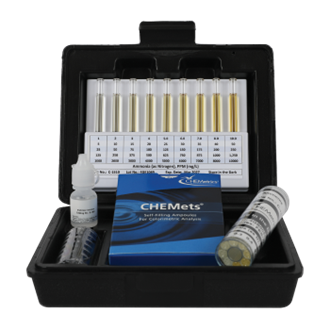
CHEMetrics offer a large range of chlorine test kits for the analysis of wastewater. They offer test kits for the measurement of both free and total chlorine at multiple ranges. The K-2513 test kit measures free and total chlorine from 0-5.00 ppm and has been approved by the USEPA for use in wastewater NPDES reporting.
Testing for Hardness in Wastewater
Measuring hardness is helpful for the efficiency of any municipal or industrial WWTP. Hardness is caused by minerals in water like calcium and magnesium. High hardness can cause scaling and interfere with many of the treatment steps like filtration and sedimentation. Understanding the hardness of the water being treated can help prevent costly unexpected maintenance and troubleshoot efficiency problems.
Hardness Test Kits for Wastewater
CHEMetrics offers Hardness test kits with the familiar EGTA and EDTA methods. These kits come with everything you need for 30 tests and utilize the Titrets® testing method. This method uses a vacuum sealed glass ampoule to conduct a reverse titration so the test can be conducted right in the field.
The video below shows how easy Titrets® are to work with.
Partnering with CHEMetrics
Wastewater treatment is a large project with many moving parts. Between changing influent and regulatory requirements there is a lot to manage. This post offers a light overview of wastewater sampling and testing. There are many other tests a wastewater operator may want to conduct. CHEMetrics offers many wastewater tests not covered here. Contact us today to ensure you have the tests you need, when you need them!